|
|
Poggibonsi |
|
|
Poggibonsi |
|
Poggibonsi |
Tourist information office in Poggibonsi is at Piazza Mazzini 6, opposite the railway station.
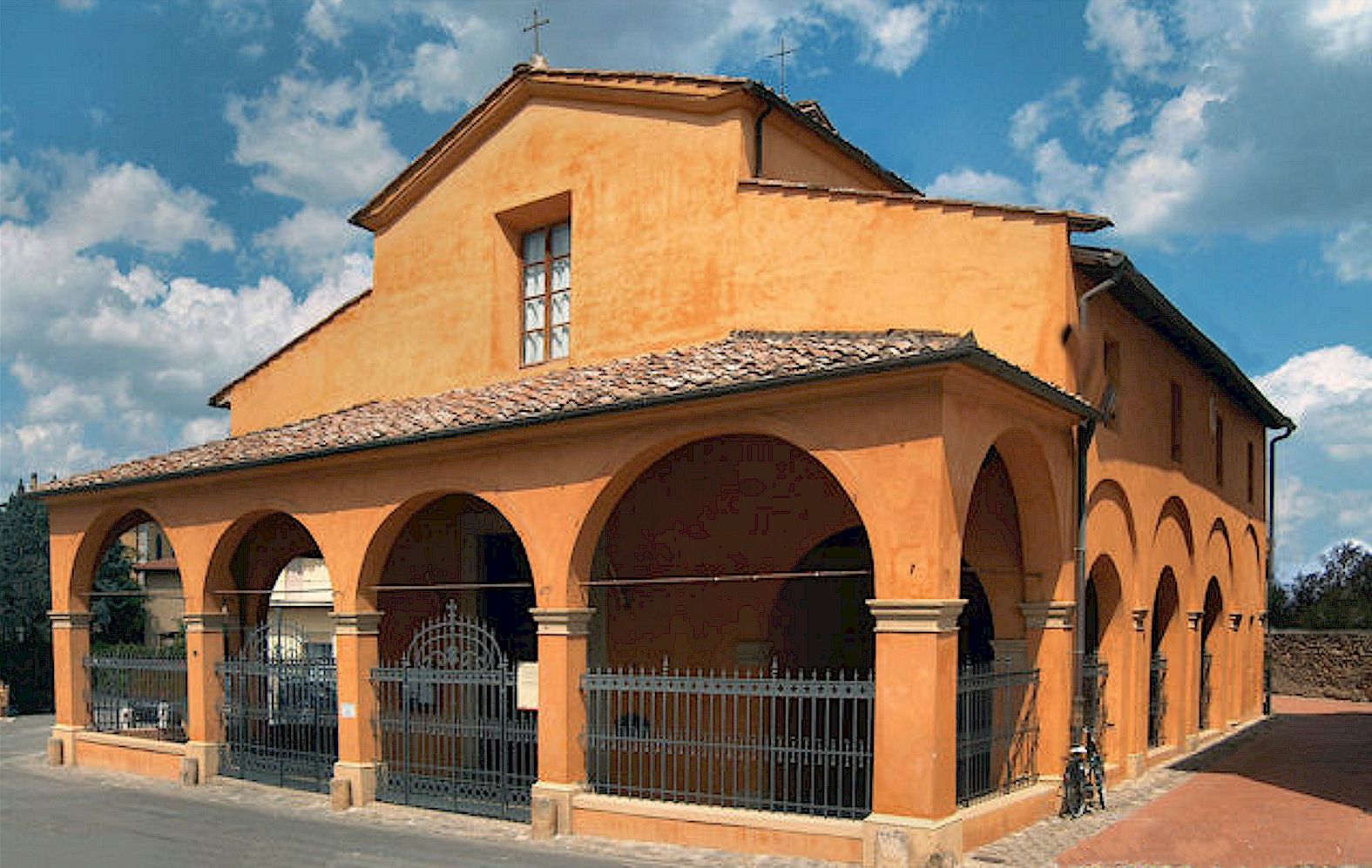
Santuario di Romituzzo a Poggibonsi
|
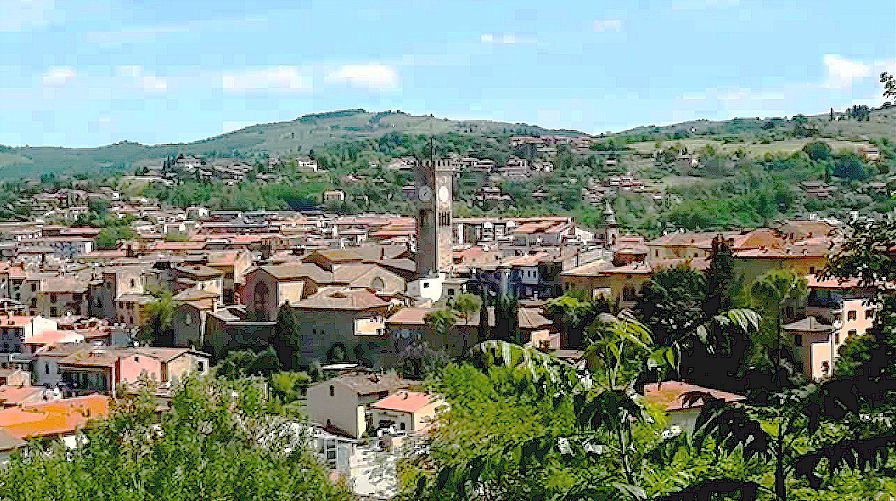
Poggio Bonizio first becomes known towards the end of 13 C as a town at the point where the rivers Staggia and Elsa meet, on the famous via Francigena. Poggio Bonizio was destroyed in the 1270 by Guy de Montfort, a legendary figure even in Tuscany - he merits a cameo role in Boccaccio's Decameron as well as Verdi's Sicilian Vespers. The town was rebuilt in the lower valley, on the site of the village Marturi and came to be known as Poggibonsi.
The modern town of Poggibonsi was much damaged by bombs during the second world
war. Joseph Heller's first bombing run was over Poggibonsi on 24 May, 1944.
Poggibonsi is nowadays the biggest industrial area of the
Valdelsa. In the city centre we can find the two
churches of San Lorenzo and the Choral, the Town Hall with the mayors' crests
standing next to a battlemented tower. |
|
The village and Castle of Staggia Senese |
||
|
Only the lower part of inner tower of the ancient castle of the Soarzi (Staggia Senese) still stands today, together with two circular towers from the fortified palace of the Franzesi. The village still has a mediaeval look about it though there are very few architectural elements that actually date so far back in time. Six square towers and one polygonal tower are built at intervals around the curtain walls. The Florentine Gate and the Lecchi Gate opened at the north end of the village with the Roman Gate, destroyed in 1944, to the south. |
||
|
||
|
The Church of S. Maria, once a subordinate church of the
parish of Marturi, can be found in the village itself. Its original
design was Romanesque (perhaps 13th century), later modernized in 1878
and 1904, the year in which the bell tower and cusp were built. The
church interior is in the form of a Latin cross. On the left, there is a
baptismal font by the Staggia sculptor Cesare Capezzuoli, who also
carried out the Via Crucis. The left hand wall contains panels in bronze
of stories from the New Testament by sculptor Giulio Capezzuoli, again
from Staggia. The two round windows that illuminate the chapels in the
transept date from the 16th century while the beautiful grey stone
ciborium is in pure Renaissance style. The presidential chair in
travertine stone by architect Alessandro Bagnoli stands behind the high
altar. |
|
|
Poggibonsi |
Poggibonsi © ammonet InfoTech 2000 - 2020. All rights reserved.


)
)